 EN
EN
Industrial facilities face a critical decision when selecting overhead door systems that balance functionality, efficiency, and operational requirements. The choice between sliding and sectional industrial doors significantly impacts daily operations, energy costs, and long-term maintenance expenses. Understanding the fundamental differences between these two dominant door technologies enables facility managers to make informed decisions that align with their specific operational needs and budget constraints.
Design and Construction Fundamentals
Sliding Door Architecture
Sliding industrial doors operate on a horizontal track system that allows the door panel to move laterally across the opening. These systems typically feature a single large panel or multiple interconnected panels that slide along overhead rails. The construction emphasizes robust steel frameworks with reinforced mounting points to handle the substantial weight loads during operation. Track systems must be precisely engineered to accommodate thermal expansion and contraction while maintaining smooth operation across varying weather conditions.
The structural requirements for sliding doors demand significant wall space adjacent to the opening to accommodate the door panel when fully opened. This horizontal movement mechanism requires specialized hardware including heavy-duty rollers, guide tracks, and tensioning systems that ensure consistent performance under industrial operating conditions. Weather sealing components are integrated along the track perimeter to maintain environmental control within the facility.
Sectional Door Engineering
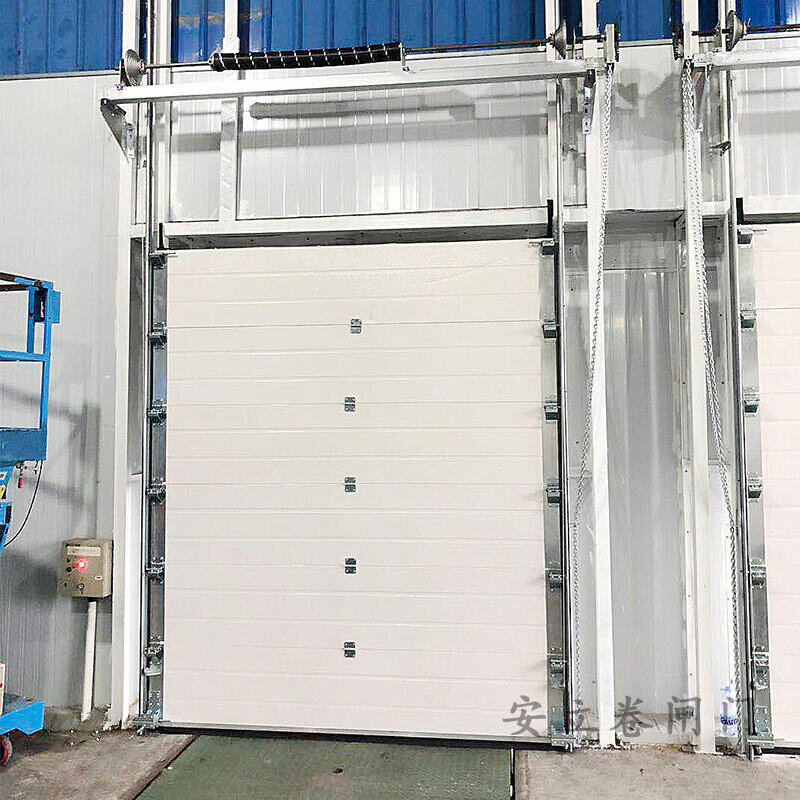
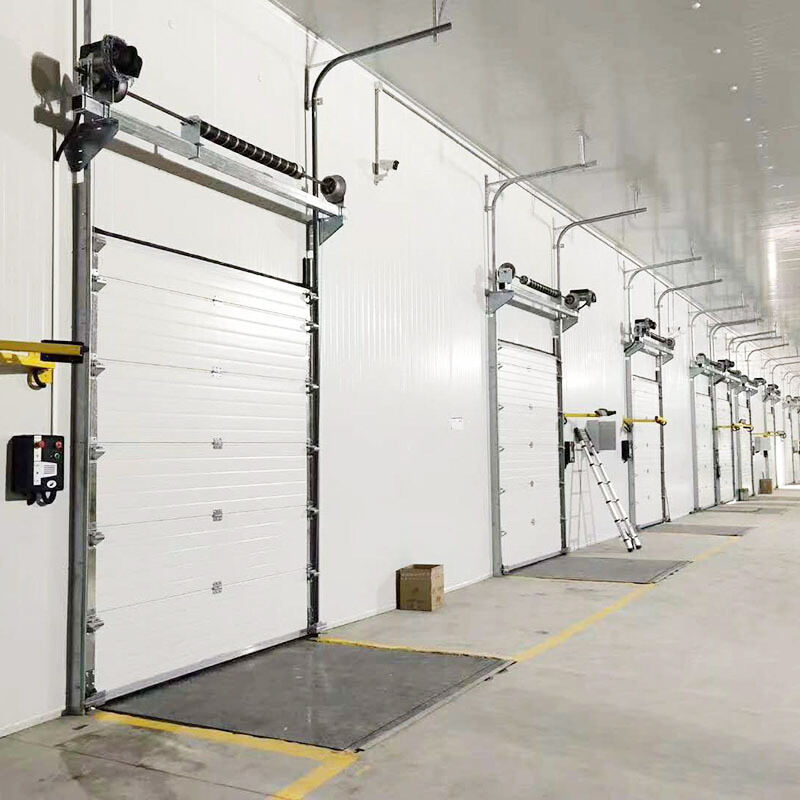
Sectional industrial doors comprise multiple horizontal panels connected by hinges that allow the door to follow curved track sections during opening and closing cycles. This segmented design enables the door to transition from vertical to horizontal positioning, storing overhead within the building structure. The panel construction typically incorporates insulated cores sandwiched between steel facings, providing superior thermal performance compared to single-panel alternatives.
The engineering of sectional industrial doors requires precise track alignment and spring balance systems that counteract the door weight throughout the operating cycle. Torsion springs or extension spring assemblies provide the necessary force multiplication to enable smooth operation while reducing strain on motorized operators. Advanced seal systems between panel joints and around the door perimeter ensure effective environmental separation.
Operational Characteristics and Performance
Opening Speed and Efficiency
Sliding doors typically demonstrate faster opening speeds due to their simplified horizontal movement pattern and reduced mechanical complexity. The linear motion requires fewer direction changes compared to sectional systems, enabling rapid access for high-traffic applications. However, the speed advantage becomes less significant in applications where partial opening capability is required, as sliding doors must traverse their entire operating distance.
Sectional doors offer superior partial opening capabilities, allowing operators to access different height levels within the opening without fully cycling the door. This flexibility proves particularly valuable in loading dock applications where varying truck heights require adjustable clearances. The segmented design permits fine control over opening dimensions while maintaining environmental sealing for unused portions of the opening.
Reliability and Maintenance Requirements
The mechanical simplicity of sliding door systems generally translates to reduced maintenance requirements and enhanced reliability in harsh industrial environments. Fewer moving parts mean reduced wear points and lower probability of mechanical failure. Track cleaning and roller lubrication represent the primary routine maintenance tasks, with component replacement typically involving straightforward procedures that minimize downtime.
Sectional industrial doors require more comprehensive maintenance protocols due to their increased mechanical complexity. Spring tension adjustments, track alignment verification, and panel hinge lubrication demand specialized knowledge and tools. However, the modular panel construction enables targeted repairs or replacements without replacing the entire door system, potentially reducing long-term maintenance costs despite higher routine service requirements.
Space Utilization and Installation Considerations
Facility Layout Impact
Sliding door installations require substantial lateral clearance adjacent to the opening, effectively consuming wall space that could otherwise accommodate storage, equipment, or operational functions. This space requirement becomes particularly challenging in facilities with limited available wall area or where multiple doors create competing clearance demands. The horizontal storage position may also interfere with crane operations or overhead material handling systems.
The overhead storage capability of sectional doors maximizes usable floor and wall space within industrial facilities. This vertical storage approach eliminates interference with adjacent equipment installations and preserves valuable real estate for productive operations. The ability to utilize ceiling space rather than wall area proves especially beneficial in high-density manufacturing environments or facilities with complex material flow patterns.
Installation Complexity and Requirements
Installing sliding door systems requires robust structural support for the horizontal track assembly and adequate foundation preparation to handle concentrated load points. The installation process typically involves fewer overhead clearance considerations but demands precise track alignment to prevent binding or premature wear. Electrical requirements focus primarily on operator motors and safety systems positioned along the travel path.
Sectional door installations present greater complexity due to the curved track systems and spring balance mechanisms required for proper operation. Overhead clearance calculations must account for the door panel storage requirements and any potential interference with building systems. The installation process requires specialized knowledge of spring tensioning procedures and safety protocols to prevent injury during assembly and adjustment phases.
Environmental Performance and Energy Efficiency
Thermal Insulation Properties
Single-panel sliding doors often provide limited insulation performance due to their monolithic construction and the practical constraints of incorporating substantial insulation materials without compromising structural integrity. The sealing systems around the door perimeter represent critical points for thermal performance, requiring careful design and installation to minimize heat transfer and air infiltration.
Sectional industrial doors typically offer superior insulation performance through their multi-panel construction that accommodates substantial insulation cores within each section. The segmented design enables the use of thermal breaks and advanced sealing systems that minimize heat transfer between interior and exterior environments. This enhanced thermal performance translates directly to reduced energy consumption for climate control systems.
Weather Resistance and Durability
The weather resistance of sliding doors depends heavily on the seal integrity along the track system and door perimeter. Wind loading can create significant stress on the door panel and track assembly, requiring robust engineering to prevent deflection or damage during severe weather events. The horizontal orientation may accumulate snow or ice loading that impacts operation until cleared.
Sectional doors demonstrate excellent wind resistance due to their segmented construction that distributes loading across multiple panel connections and track attachment points. The vertical closed position sheds precipitation effectively and reduces accumulation of debris that could interfere with operation. Advanced weather sealing systems between panels provide superior protection against moisture infiltration and air leakage.
Cost Analysis and Economic Considerations
Initial Investment Requirements
Sliding door systems typically require lower initial capital investment due to their simplified construction and reduced hardware requirements. The straightforward track assembly and single-panel design minimize material costs while reducing installation complexity and labor requirements. However, the total project cost must account for any facility modifications required to accommodate the lateral clearance requirements.
The initial cost of sectional industrial doors reflects their increased mechanical complexity and material requirements for the multi-panel construction and track systems. Advanced spring balance mechanisms and specialized hardware components contribute to higher upfront investment. However, the space-saving design may eliminate the need for facility modifications, potentially offsetting the higher door cost through reduced construction expenses.
Long-term Operating Costs
Operating cost analysis must consider energy consumption, maintenance expenses, and replacement part availability over the door's service life. Sliding doors may offer advantages in maintenance simplicity but could incur higher energy costs due to reduced insulation performance. The availability of replacement parts and service technician expertise also influences long-term cost projections.
Sectional doors may demonstrate superior long-term value through energy savings from enhanced insulation performance, despite higher routine maintenance requirements. The modular construction enables targeted component replacement, potentially extending overall system life and reducing replacement costs. Advanced control systems available with sectional doors may also contribute to operational efficiencies that offset initial cost premiums.
FAQ
Which door type offers better security for industrial applications
Sectional industrial doors typically provide superior security due to their multi-point locking systems and reinforced panel connections that resist forced entry attempts. The segmented construction creates multiple failure points that an intruder must overcome, while sliding doors present a single large panel that may be more vulnerable to targeted attacks. Both systems can incorporate advanced security features, but sectional doors offer inherent structural advantages for high-security applications.
How do maintenance costs compare between sliding and sectional doors
Sliding doors generally require lower routine maintenance costs due to their mechanical simplicity, with primary focus on track cleaning and roller lubrication. Sectional doors demand more comprehensive maintenance including spring adjustments and panel alignment, resulting in higher routine service costs. However, sectional doors enable component-level repairs that may reduce long-term replacement expenses compared to sliding door systems that require complete panel replacement when damaged.
What factors should determine the choice between these door types
The selection should prioritize available space constraints, operational requirements, and energy efficiency goals. Facilities with limited lateral wall space benefit from sectional doors, while applications requiring maximum opening speed may favor sliding systems. Consider traffic patterns, partial opening needs, insulation requirements, and long-term operational costs when making the final decision. Professional consultation can help evaluate site-specific factors that influence optimal door selection.
Can both door types accommodate automated operation systems
Both sliding and sectional industrial doors readily accommodate automated operation systems, though sectional doors typically offer more sophisticated control options due to their mechanical complexity. Sliding door automation focuses on variable speed control and safety systems, while sectional door automation can include features like partial opening presets, obstacle detection, and integration with building management systems. The choice of automation features should align with operational requirements and safety protocols specific to each application.